

These are my final six reviews of the Twin Cities Horror Festival XV, and with these, I will have successfully seen and reviewed all 14 shows in this year’s festival. I don’t think I could have finished with a stronger lineup. All six shows I saw today fall into the bloody good category, which is the highest category you can achieve at the TCHF, at least in the system I just made up. Not only was every show a winner today, but the lineup also mirrored the diversity and variety of the TCHF.
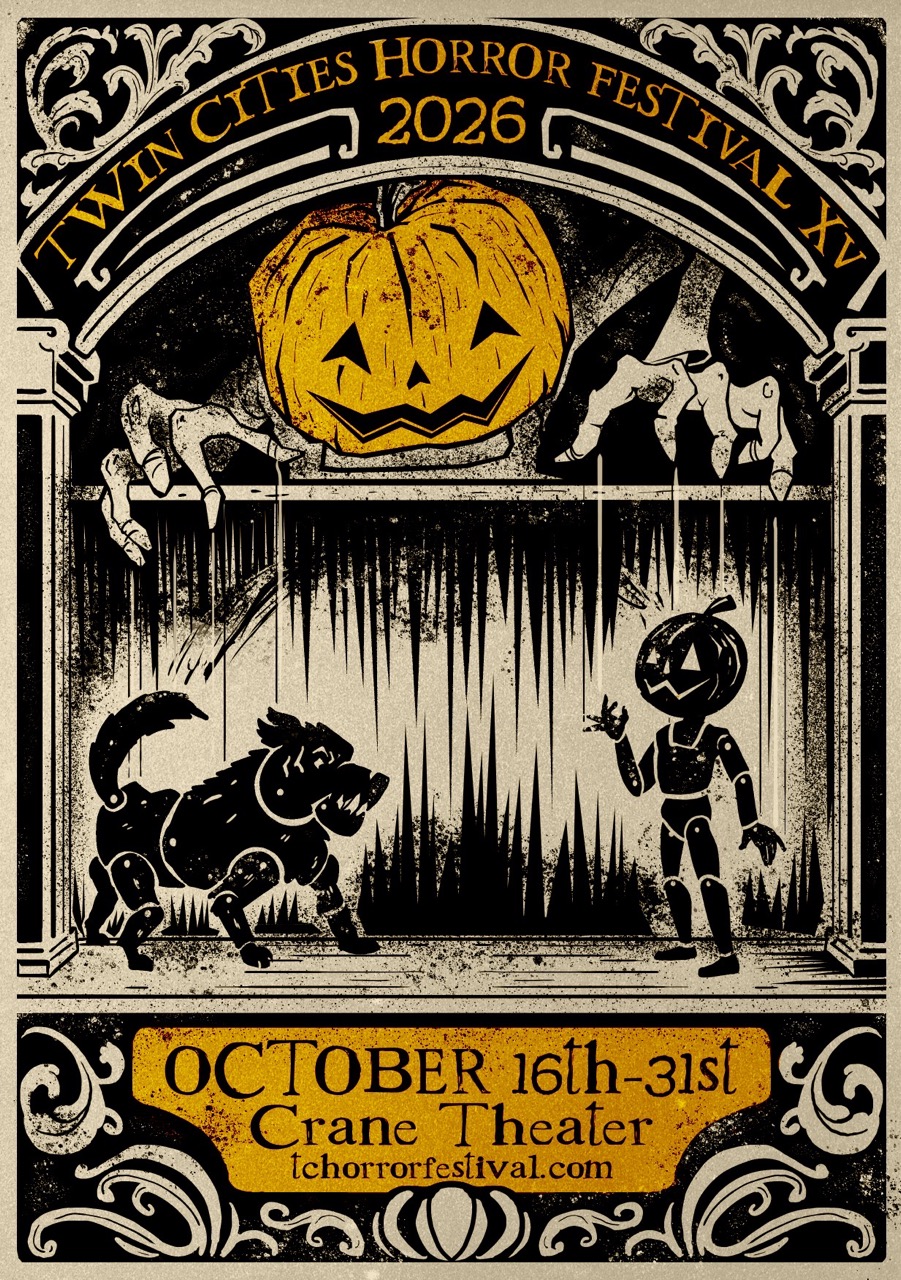
If you haven’t seen everything yet, or haven’t seen anything, there are still six days left of the festival, and you now have reviews of all the shows to help you figure out which ones are must-sees. But listen, a lot of shows have been selling out this year, so don’t wait and see. Figure out what you want to see, go online, and get tickets. This really is the best way to celebrate Monster Month. Not only are the shows a blast, but the whole vibe of the festival, its atmosphere and community, is so unique. Find some time between now and Halloween, when the festival closes, to check it out. Here is a link to the festival website so you can get all the details and purchase tickets.
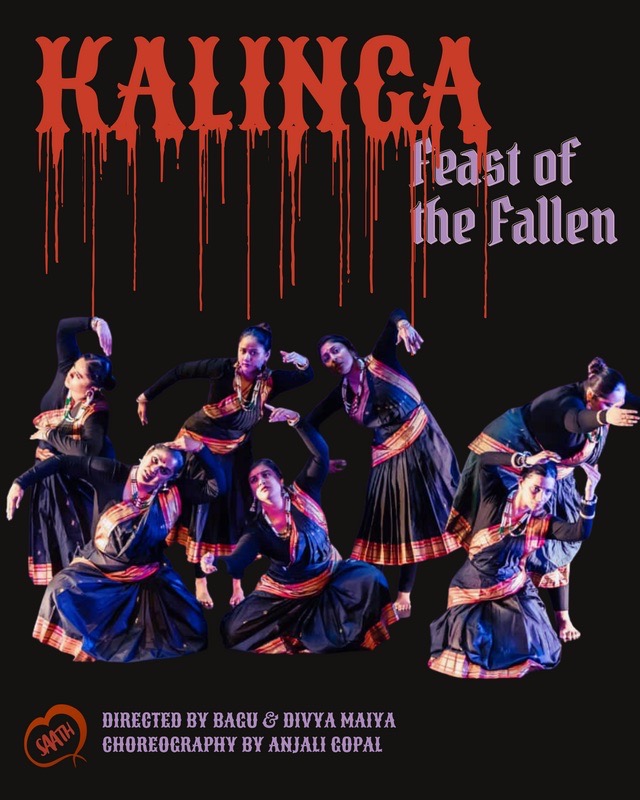
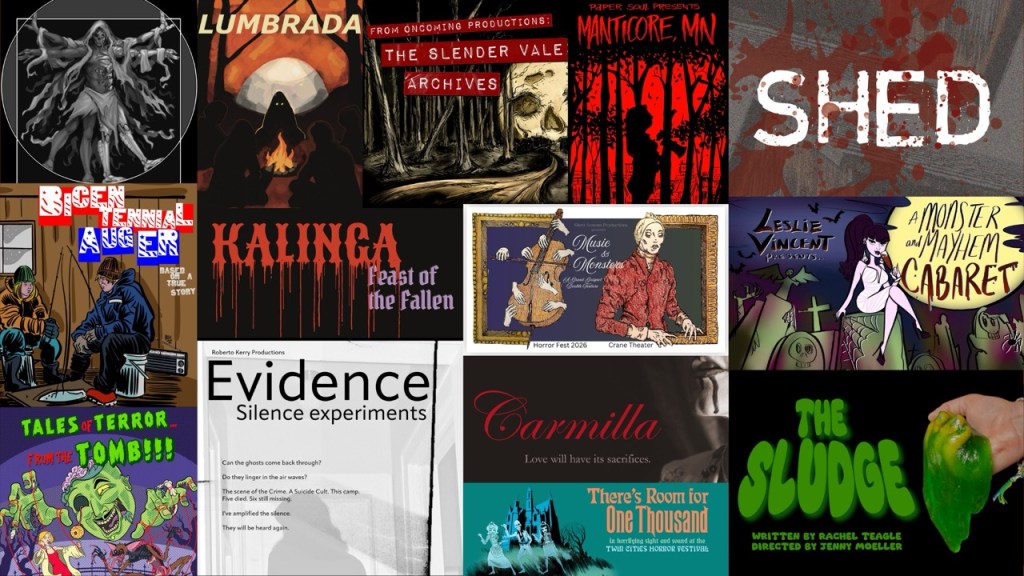
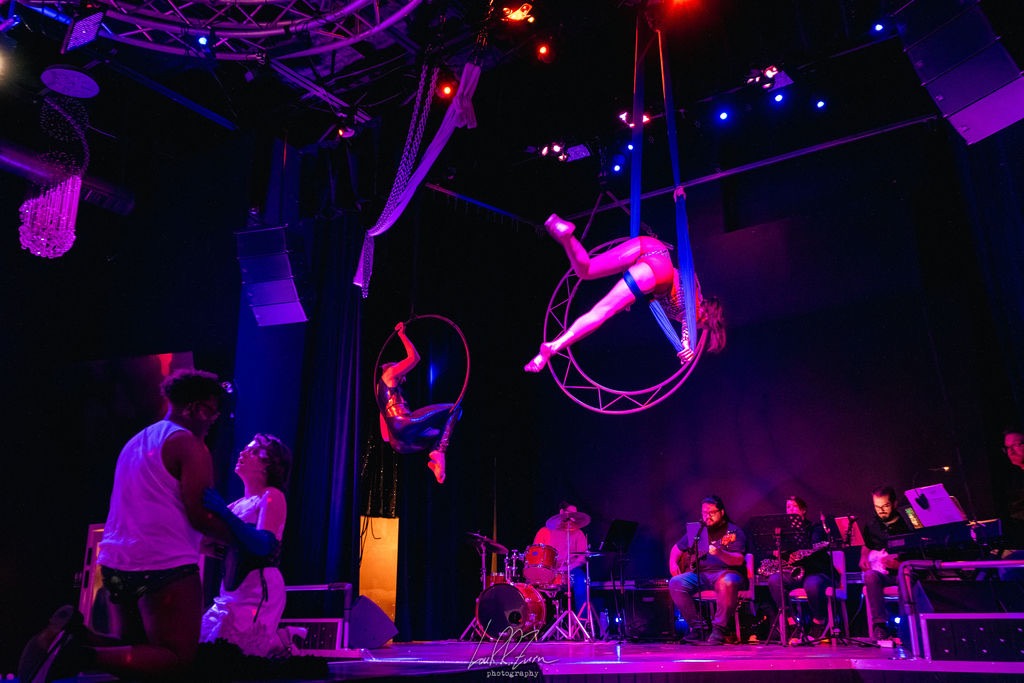
KALINGA: Feast of the Fallen is definitely a unique show in this year’s TCHF, and basically any year, really. Created and performed by Saath, a South Asian theater company, this is a show that involves extensive dance. The show reimagines an ancient South Indian tale of a great battle and the goddess Kali and her ghostly followers, who descend and feast upon the remains of the battle.
First of all, the dancing is amazing. To be honest, that is the one thing I did expect from this production, and I wasn’t disappointed. What I did not expect was the atmosphere they created, first by having a cast member wandering through the audience ahead of the show, creeping us out. And I mean that as a compliment! I love when shows engage with us in this way and create anticipation for what is to come.
I think I was expecting them to tell a story that could tangentially be labeled horror through dance. But this was a full-blown horror production, not in the sense that it was too scary or too bloody for anyone, but in the way they used many of the techniques we are accustomed to at the TCHF: props of severed limbs, some very cool and unexpected makeup effects, and strategic lighting cues.
This really was a delight to behold and very effective as horror dance theater. I hope this company returns to the TCHF in the future with new stories told in their unique style.
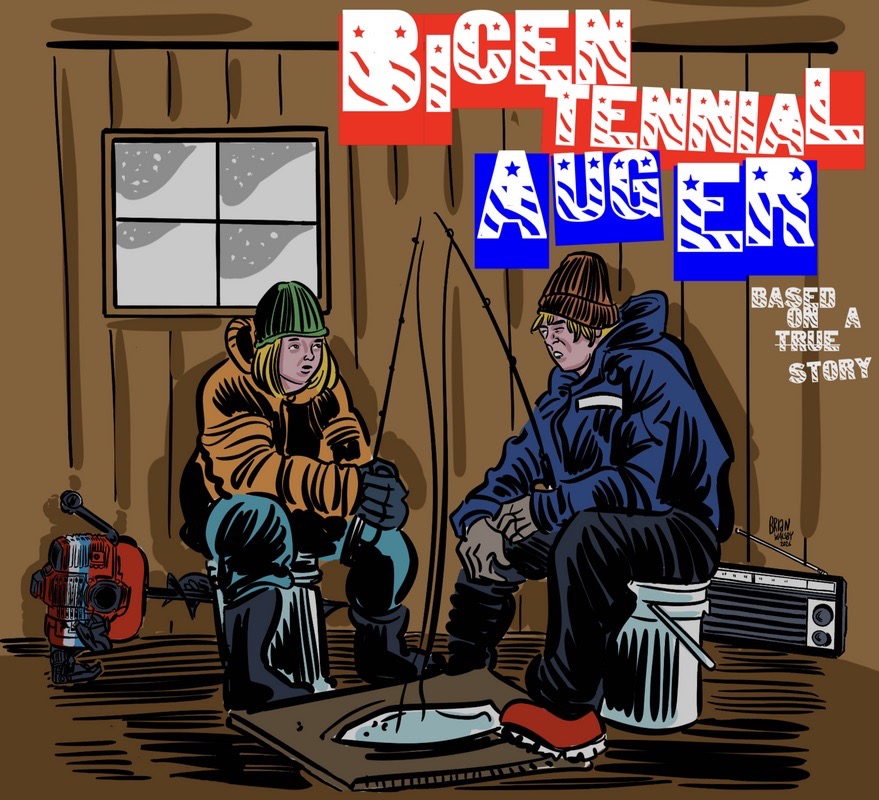
Bicentennial Auger takes over the studio space for the second half of the festival. Each festival, two shows share the space, one at the start of the festival and the second toward the end. The studio space allows shows to have more complex sets because they don’t have to be loaded in and out in ten minutes before every show.
This one features a great set designed and built by Derek Lee Miller. It’s an ice house, the kind used in Minnesota winters for ice fishing. It’s a great-looking set that also includes some surprises for the audience.
The story concerns two siblings who haven’t seen each other in seven years, meeting up to go ice fishing. There is tension between them, which we will come to understand. The show features great performances from the cast: Noe Tallen, Dave Gangler, and Jared Reise.
It also features effective use of music, no surprise there, as the show is written and directed by Sam Landman, who can occasionally be found DJing and whose musical knowledge is as eclectic as it is extensive. This is a man who wrote a They Might Be Giants musical but filled it with deep cuts rather than the band’s more popular songs.
There have been several very well-written shows at the festival this year, and this is right up there with the best of them. Landman has an ear for dialogue that sets his scripts apart from others. They are funny without relying on jokes and go in directions you do not expect.
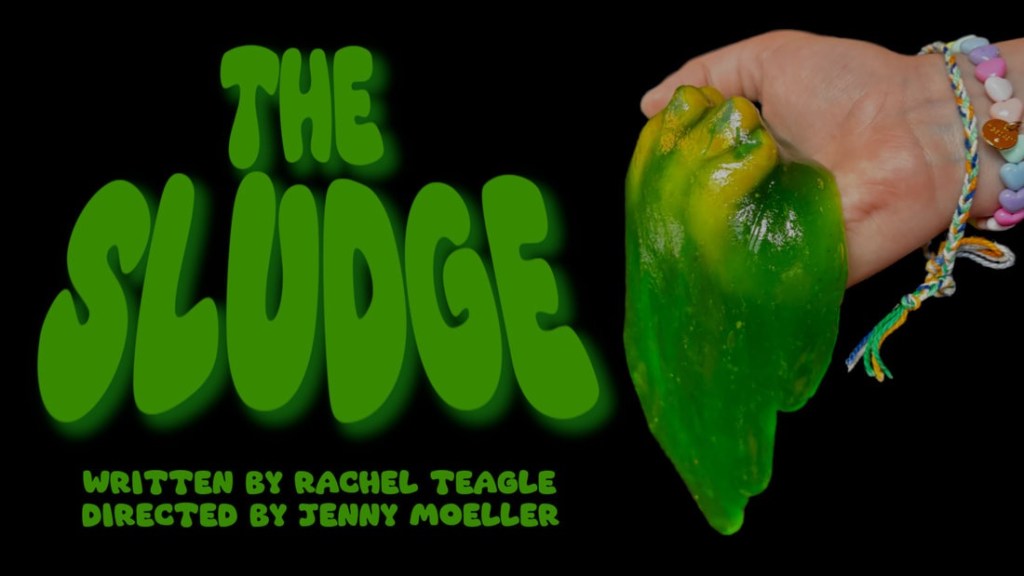
The Sludge is a family-friendly show. It’s the one show this festival where I’ve seen multiple youngsters in the audience. That doesn’t mean it’s for kids; it means it’s for everyone. Shows at the TCHF run the gamut from gory and scary to quirky and funny, and this one leans very heavily into the humor.
The story follows two sets of mothers and daughters. One, Elliot and her daughter Viv, is going through a divorce, and the other, Drew and her daughter Harper, are the friends they go and stay with. Harper is a science nerd who discovers something she can’t identify in the woods and brings it home. This is the sludge of the title. As we discover, it is not the harmless piece of nature Harper supposes it to be.
The script is definitely funny, but is it as funny as the show itself? What I’m getting at is that a lot of the humor comes from the performances as much as it does from the script.
The one thing this show makes abundantly clear is that Rita Boersma, who plays Drew, is a Twin Cities treasure and quite likely the best line reader in Minnesota. I’m not entirely sure she can speak a line without eliciting at least a grin from the audience. Don’t get me wrong, the entire cast is very good and very funny, but Boersma makes sorting socks funny.
It was also nice to see Victoria Pyan in several roles, including Harper’s soccer coach. I’m really starting to wonder how this talented young woman flew under my radar until recently.
This is a very funny, all-ages-friendly show without being aimed at children. I enjoyed it as much, probably more, than any kid would. Written by Rachel Teagle and directed by Jenny Moeller, the dialogue has such a natural, off-the-cuff feel to it that you’d almost think it was improvised.
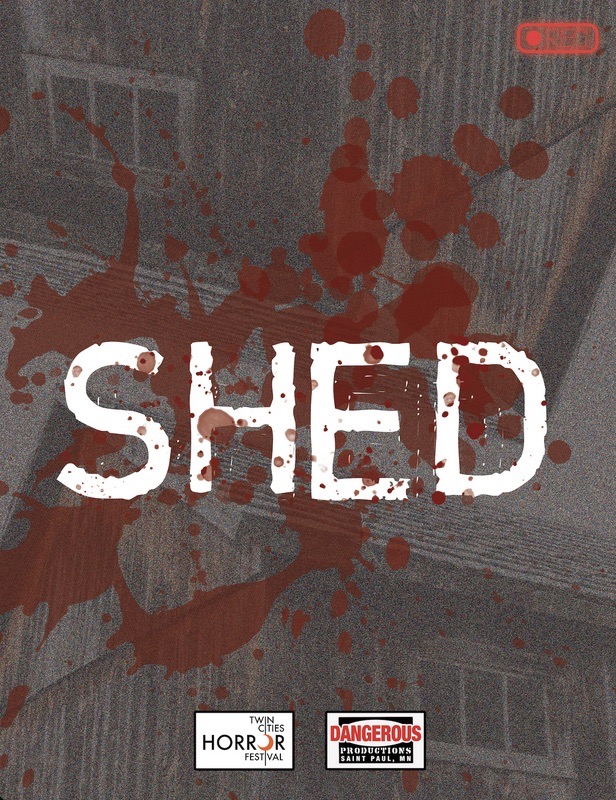
Shed is this year’s entry from TCHF veterans Dangerous Productions. Faithful readers or regular attendees at the TCHF might remember this company as the tarp team. They are known for being the theater company that actually tries to scare the audience. They are masters of pointing flashlights out into the audience to surprise us with jump scares involving how or what comes onstage while we are blinded by the light. They also generally put on the bloodiest shows, hence the tarp.
This one was actually a little restrained for Dangerous Productions, but what they did in terms of effects was extremely effective.
Jay Kistler, who is usually in Dangerous Productions’ TCHF shows, plays Jeff, a guest on a podcast. He’s there to tell the story of the Man in the Shed, but what starts out ordinarily enough becomes more and more bizarre as the host, Natalie, doesn’t just want Jeff to tell the story but wants them to act it out. Add in a third performer, who plays the man in the shed in his underwear and a pig’s mask, and all bets are off.
With this company, you expect the unexpected, and that certainly happens. This is bloody, to be sure. It has several genuinely frightening moments and also manages a few laughs.
There’s a reason Dangerous Productions always gets a slot at the TCHF: they never disappoint. They are the one company you can rely on to try and actually be scary. And let’s face it, when people think of horror shows, blood is one of the things that comes to mind. With Dangerous Productions, you know there will be blood.
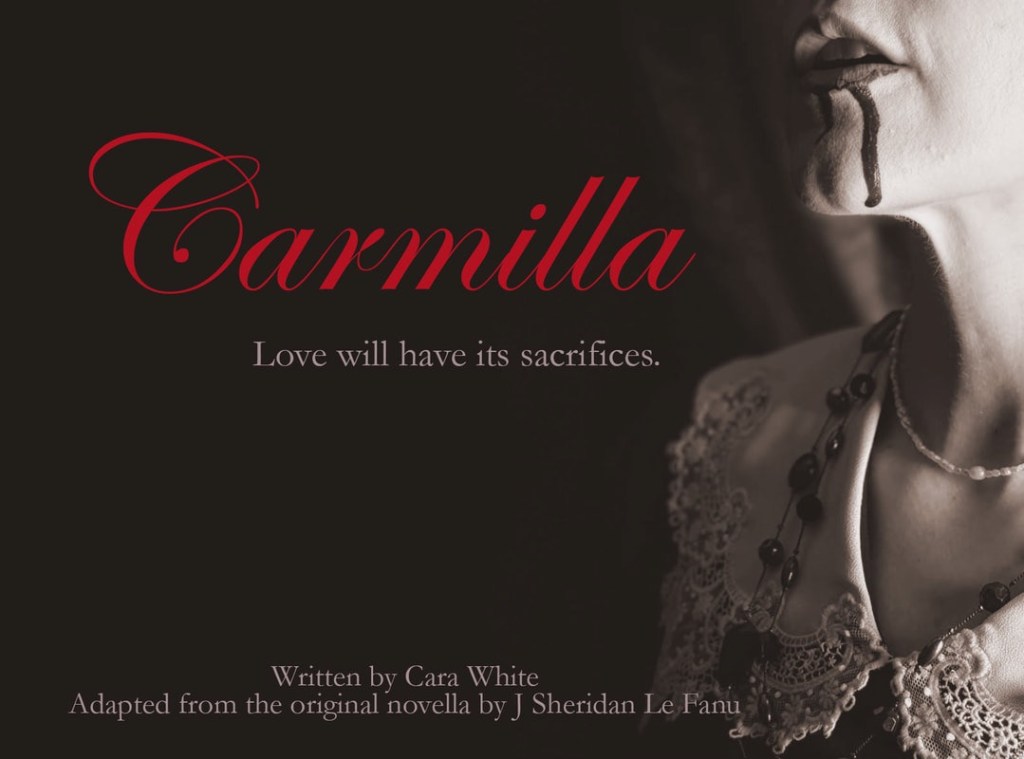
Carmilla is an adaptation of the classic 1872 vampire novella by Joseph Sheridan Le Fanu.
Every October in The Stages of MN household, we try to watch only horror movies. Now, Mrs. The Stages of MN, Micky to her friends, can’t really handle things that are too scary or too bloody. Therefore, we watch a lot of older horror movies, and this year, among other movies, we are watching the Hammer Films Karnstein Trilogy. The first film, The Vampire Lovers, is based on Le Fanu’s novella. This source material, you may be surprised to learn, predates Bram Stoker’s Dracula by a quarter of a century.
This adaptation is written and directed by Cara White. Carmilla is told from the perspective of Laura, who, under hypnosis, relays the story to a doctor who is concerned about her health. She is the focus of Carmilla’s desire.
The play is unabashedly erotic without being explicit. Carmilla is the prototype of the lesbian vampire. The relationship between Carmilla and Laura, played by Maretta Zilic, is less that of hunter and prey and more romantic in nature.
Zilic is quite good in the role of Laura, as is Mahmoud Hakima, who plays Gen Speilsdorf, who arrives at the end of the play seeking to destroy Carmilla, who killed his daughter.
TCHF Artistic Director Nissa Nordland, who is also responsible for the blood effects in the show, which are very well done, brings an air of otherworldliness to the role of Carmilla. Fitting for a character who exists outside the natural world.
The show features some great costumes and set pieces. It’s always nice to have a classic story in the mix, and I appreciated how White didn’t try to modernize or sensationalize the story but remained faithful to the themes and ideas of the original.
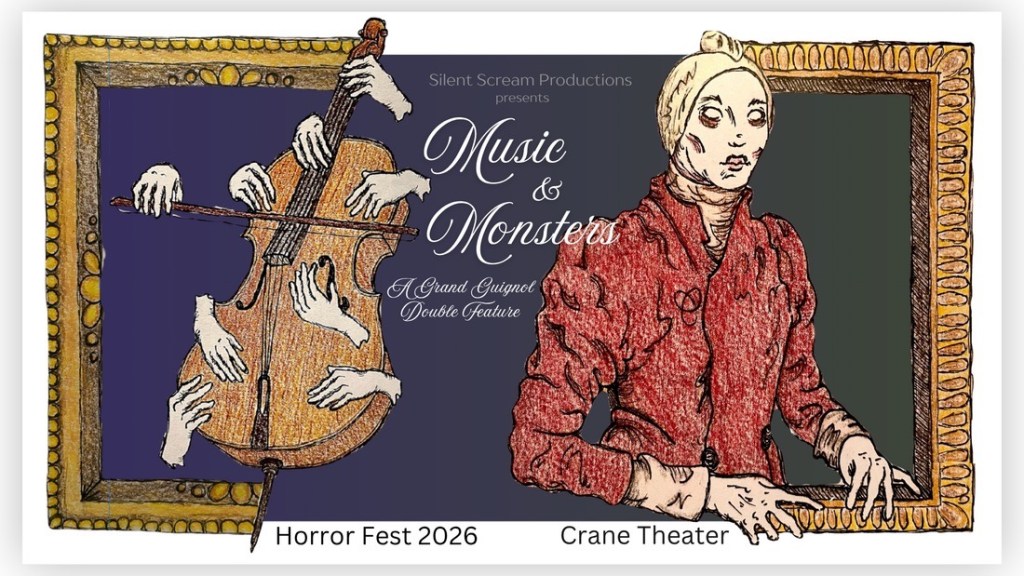
We talk about the variety of the TCHF as a strength, and this final batch of shows really showcases that aspect. Music & Monsters: A Grand Guignol Double Feature was the perfect show to end the day with because it is itself a showcase for that variety.
The first tale is very much one of those supernatural stories you’d get in an episode of a horror anthology TV show like The Twilight Zone or The Veil. It concerns a man who arrives at a boarding house to rent a room. He is drawn to the music coming from another tenant’s room. That tenant is violently opposed to engaging with the new renter or sharing anything about his music with the man. But is it to maintain control of the music, or is the music itself the one really in control?
After that tale ends, we get a series of quick, hand-related jokes and gags that are extremely funny and act as a palate cleanser after the more-or-less played-straight first tale.
Then we go into our second story, which is a take on the Frankenstein story. This mixes comedy with some gore and blood-effects work. There is excellent use of shadow work in the opening creation scene and the conclusion of the tale.
This show is definitely not for kids. There is an erect, though clothed, penis on display for a lengthy amount of time, and let’s just say things don’t end well for the penis, in a moment that is both hilarious and terrifying.
The four-member cast of Kaitlen Osburn, Nick Miller, Jesse March, and Kathryn Cesarz is very strong, equally effective in the initial dramatic scene, the silly, almost vaudevillesque bridging sequence, and the funny but also horror-heavy second tale.

Don’t forget to keep an eye on the new website 79 Seconds on Stage a free and full guide to local theatre in the Twin Cities.
Don’t rely on Facebook or Instagram algorithms to keep you in the loop about great shows. Subscribe and have every post from The Stages of MN delivered straight to your inbox. It’s the best way to make sure you never miss out on the theater action. To subscribe on a computer, enter your email address on the home page (right-hand side) and click subscribe. On mobile, scroll to the bottom of the page to find the same option. You can also follow me on Facebook @thestagesofmn and on Instagram thestagesofmn.
The Stages of MN YouTube channel is home to the Stages of MN Show. You can watch it by clicking here. Be sure to check out the latest episodes and subscribe so you’ll always know when a new one drops. Not sure you agree with one of my takes? I’m also part of the Twin Cities Theater Bloggers (TCTB), where you can find review roundups from my colleagues and me. Follow us on Facebook at @TwinCitiesTheaterBloggers.

You must be logged in to post a comment.